Guide
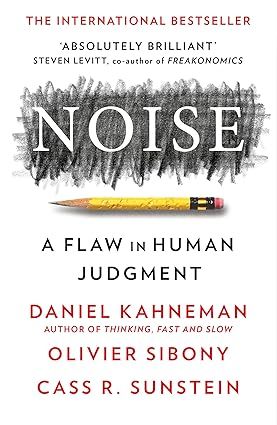
This text examines noise, defined as the unwanted and often invisible variability in human judgment that leads to costly errors across various professions. Unlike bias, which represents a systematic deviation in a specific direction, noise involves inconsistent conclusions reached by experts faced with the identical data. The authors identify several categories, including level noise, where individuals differ in their general stringency, and occasion noise, where external factors like mood or fatigue alter a person's own decisions. Case studies in medicine, law, and insurance demonstrate that this inconsistency is far more pervasive and damaging than most organisations realise. To combat these flaws, the sources propose decision hygiene techniques, such as using structured protocols, independent assessments, and simple algorithms. Ultimately, the work advocates for statistical thinking and mechanical aggregation to replace unreliable intuitive judgments and improve overall accuracy.
Click the play button to play in the global player
Downloads
Upload 3 books to unlock lifetime access to all audio downloads